
Diatonic Scales
The diatonic scale is a fundamental musical concept that forms the basis for much of Western music. It is a seven-note scale consisting of a specific pattern of whole and half steps (also known as tones and semitones) that repeats at the octave. The diatonic scale is essential in understanding harmony, melody, and chord progressions in music. Let us explore it in depth and discuss how to use it in making music.
Scale Structure:
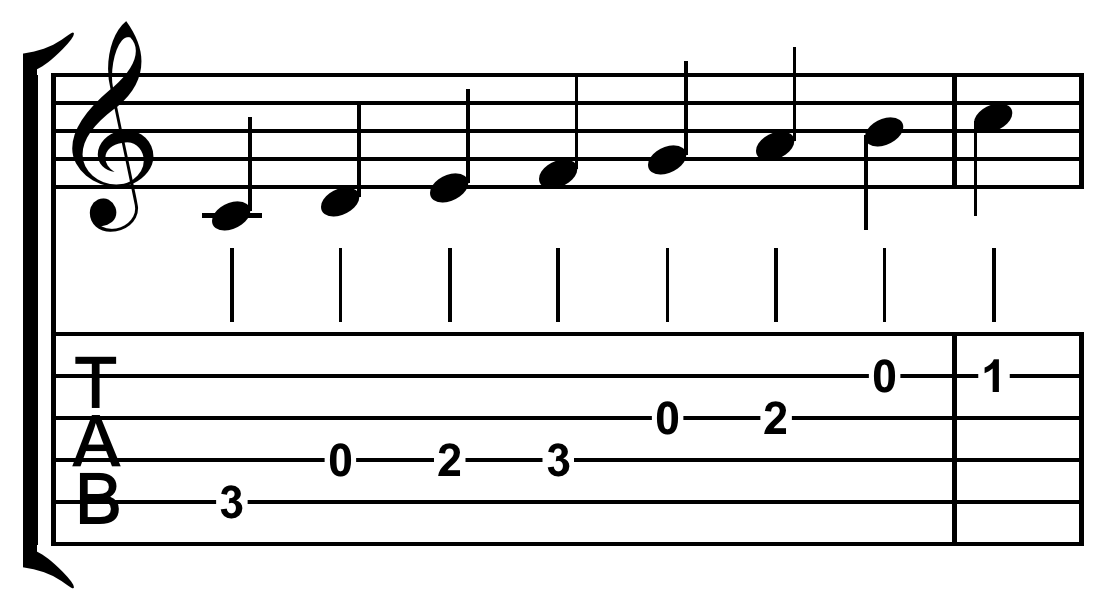
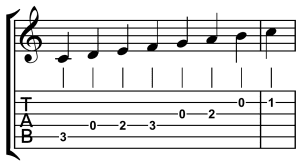
The diatonic scale follows a specific pattern of intervals between its notes. In Western music, the most common diatonic scale is the major scale. Here is the structure of a major diatonic scale, using C as an example:
C – D – E – F – G – A – B – C
The pattern of whole (W) and half (H) steps in the major scale is W – W – H – W – W – W – H.
In this case, “W” represents a whole step (two semitones), and “H” represents a half step (one semitone).
Scale Degrees:
Each note in the diatonic scale is assigned a scale degree, which is a number that indicates its position within the scale. In the C major scale, for instance:
– C is the first degree (the tonic)
– D is the second degree (the supertonic)
– E is the third degree (the mediant)
– F is the fourth degree (the subdominant)
– G is the fifth degree (the dominant)
– A is the sixth degree (the submediant)
– B is the seventh degree (the leading tone)
Harmony:
Diatonic scales are the foundation for harmony in Western music. Chords are built by stacking intervals from the diatonic scale. Common chords include the triad (root, third, fifth) and seventh chords (root, third, fifth, seventh). For example, in C major:
– C major chord: C – E – G
– D minor chord: D – F – A
– G dominant seventh chord: G – B – D – F
These chords can be combined to create chord progressions, which are the backbone of many songs.
Melody:
Melodies are often constructed using notes from the diatonic scale. Melodies that use the notes of the diatonic scale tend to sound harmonious and pleasing to the ear. Musicians often use the scale degrees to navigate through melodies and create tension and resolution.
Modulation:
Musicians use diatonic scales to modulate (change key) within a piece of music. Transitioning from one diatonic scale to another can evoke different emotions and moods.
Composition and Songwriting:
When composing or songwriting, understanding the diatonic scale is essential for creating melodies, harmonies, and chord progressions that sound coherent and structured. Musicians often use the scale as a framework to build upon, adding variations and non-diatonic notes for color and emotion.
Modes:
The diatonic scale gives rise to various modes, each with a unique pattern of intervals. For instance, the natural minor scale is a diatonic scale with a different pattern of whole and half steps compared to the major scale.
In summary, the diatonic scale is a foundational concept in Western music theory that provides the building blocks for harmony, melody, and composition. Musicians use it as a framework for creating music, whether it is in the form of chord progressions, melodies, or modulations, and it plays a crucial role in shaping the emotional and structural elements of music.